Oggcamp 2024
OggCamp returned in 2024 after a five year hiatus. This was the first time I attended. Here is my experience.
This year⌗
The atmosphere at OggCamp was extremely friendly and relaxed. Everyone there is united by a love for free and open culuture. Naturally, that means everyone also cares deeply about equity and inclusivity. As a result, there was a sense of community, that everyone had shared values and could get along.
The main track had some excellent talks. The topics were diverse with both technical presentations and those about the social aspects of open source. About half of the time at OggCamp is for the unconference tracks. This adds to the relaxed atmosphere and feeling of community. People bring what they love and what they want to share.
A session doesn’t have to be a talk; many of my favourites presented a fun personal projects or engaged the room in a discussion. It is the attendees that make OggCamp, and everyone has the opportunity to contribute. Rather impressively, the schedule updates live as unconference slots are filled.
And not only that. There were spaces for chatting or collaborating, stalls for sponsors and project teams, merch, and a swap shop.
Compared to that other FOSS event⌗
I’m not sure it is possible to talk about OggCamp without making comparisons to FOSDEM. In fact, that came up at OggCamp a few times. It does feel a bit unfair though, as if OggCamp should aspire to be FOSDEM and its worth is measured by how similar it is.
That said, I’m going to make a comparison anyway. OggCamp is smaller than FOSDEM. At FOSDEM, each devroom has its own community. The upside of that is there are almost certainly multiple rooms you will enjoy. However, it can feel overwhelming and fragmented, or that you are trying to break into well established groups. By contrast, OggCamp felt like a more casual and welcoming community.
Another great thing about OggCamp, is that the barrier to talking is very low. The unconference tracks mean that if you have an idea, you are free to put it on the schedule. Only if the schedule gets full does there need to be a selection. The event is also very open to “talks” of different formats. It could be a more traditional presentation, it could be a demonstration, a personal experience or even a change to have a conversation about a topic you think the community would enjoy.
OggCamp is different from FOSDEM in more important ways than size and attendance. That is great because it leans into the things which make it fun, welcoming and unique.
Disco pigeon⌗
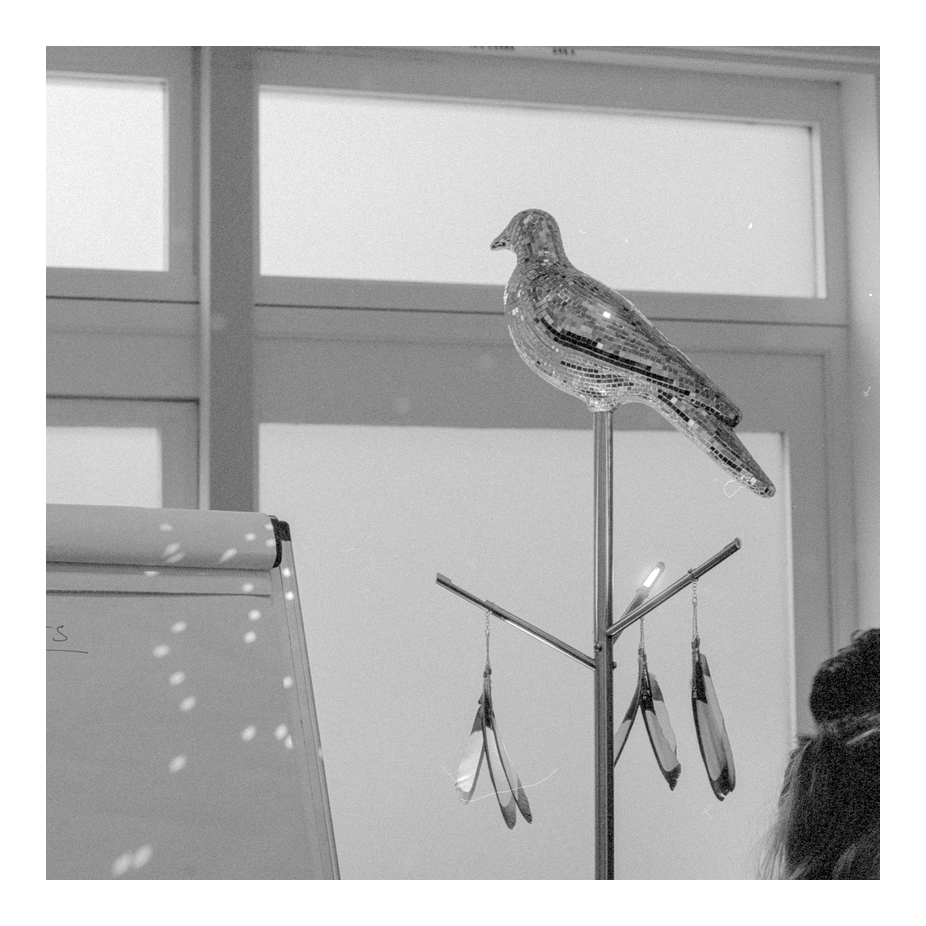
Next time⌗
I almost didn’t go to OggCamp. When it was announced I was very keen, but as the time approached I felt a bit overwhelmed with other bits of travelling and busy weekends. I was swayed when my friend Sarah said she was going. If I didn’t have the energy to talk to strangers, I would have someone I know there to stick with.
Because I went without much capacity to socialise, although it was great, I could have got more out of the event. I could have spoken to more people. There were quite a few people who I recognised from podcasts, Mastodon or other places. It might have been nice just to say I like their work. Joe Ressington validated this, saying he appreciates that. Next time, I should try to make some friends, and let a few people know I’m a fan.
Lack of preparation also meant I didn’t feel up for proposing a talk. Some of that was also not really understanding the culture and how low the bar to contribution is. Next time, I should put a post-it on the unconference board. I should be able to think of something. Some options,
- Talk about something I’ve done around my house
- Talk about a project I really like
- Bring a talk I gave somewhere else which the OggCamp crowd would enjoy, but wouldn’t have seen