Knitting a Gansey
Ganseys⌗
Ganseys are traditional, hand-knitted jumpers worn by those working in the fishing industry (particularly fishers) and knitted by their families, mostly wives who worked onshore processing catches. They have a distinctive mix of practical features like under-arm gussets, garter welts, rugged cast-ons, and top-down sleeves, well suited to their role as workwear. Ganseys are flexible, close fitting, quite wind and water-proof, and repairable.
The patterns are also distinctive, often with great texture. A single garment usually has one of horizontal or vertical bands of repeated motif. Seed, moss and garter stitches create texture and could be interspersed between other patterns to adjust size. Geometric patterns, like diamonds, herringbones, zig-zags and blocks are common. Some patterns are figurative (often nautical), using combinations of knits and purls to form flags, anchors, lighthouses, stars, hearts and trees. Cables may represent ropes and rigging.
Ganseys are now less common than other types of knitted jumper. The fishing industry which supported their creation employs fewer people, who surely prefer more suitable modern fabrics and more affordable, mass-produced clothes. Outside of workwear, the techniques which make ganseys so interesting to make by hand are less suitable for mechanised production.
Not many contemporary patterns were recorded in writing or charts. Perhaps because of low literacy rates, but maybe also because it was seen as a practical endeavour rather than artistic or an important piece of heritage to record and preserve. Instead patterns were passed down through families, or within communities. Many traditional motifs have associations to particular villages or regions.
Today, knitters and historians reverse engineer construction and designs from remaining examples or photographs. However, full patterns to replicate historical ganseys are not common and there is still a culture of people making a gansey to exact measurements with a pattern of their own design.
My Gansey⌗
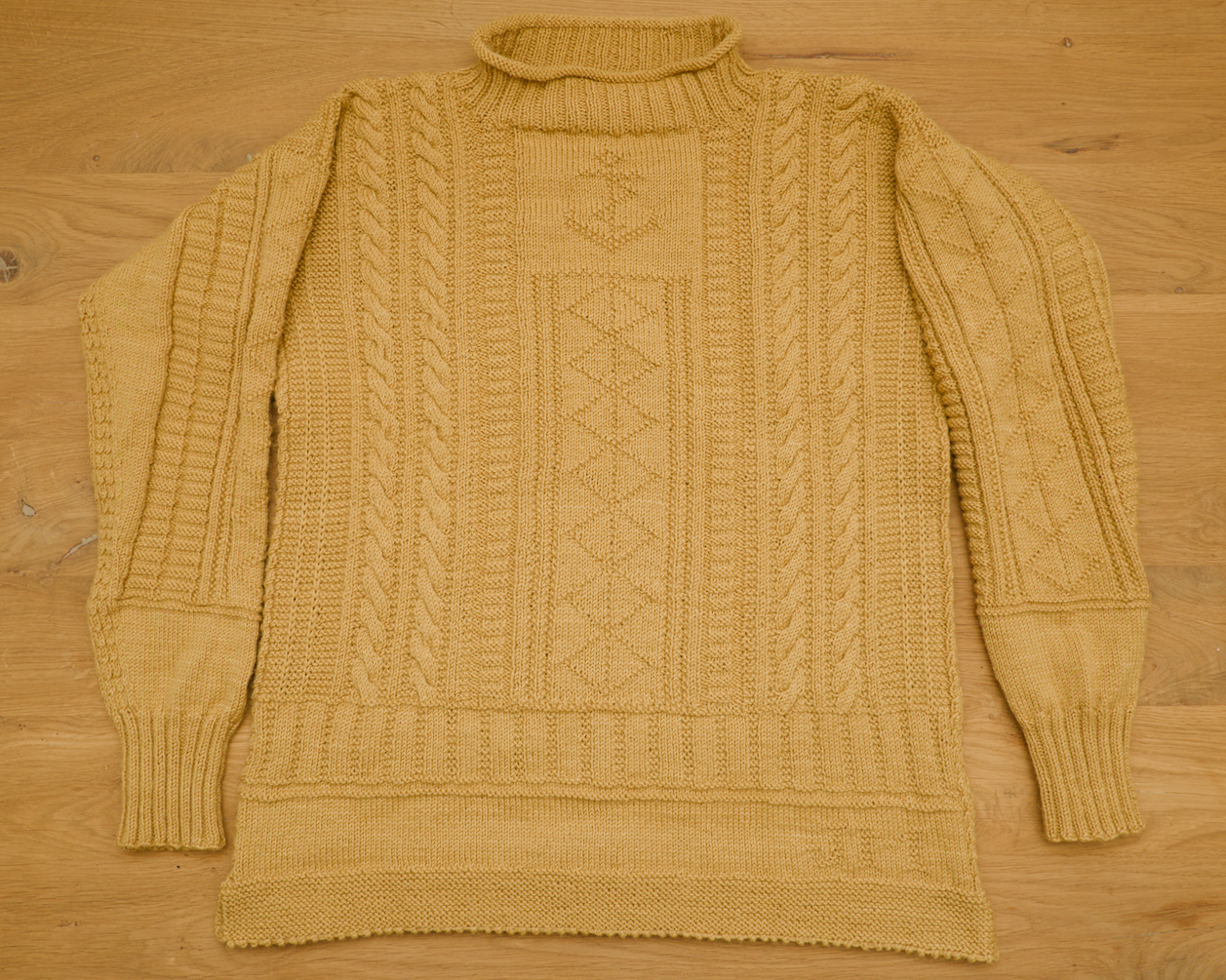
After seeing a member of my knitting group make a gansey, then an example at a Baa Ram Ewe show at Yarnology in Babacombe I decided to design my own. I used Baa Ram Ewe’s Skipper 5-ply yarn; a good match for the weight and quality of yarn traditionally used for ganseys. Although, I went with “Plymouth Yellow” rather than the traditional navy (or cream). I ended up using 2.75mm needles, slightly larger than the 2.5mm recommended, which I felt gave a good gauge.
I learned a lot of techniques, and found excellent advice for sizing and planning in Knitting Ganseys. I was anxious to draw up the pattern myself, but after following patterns without much room for adjustment, I was keen to make something fit specifically for me.
The heritage of ganseys also appealed to me and I was keen to play a role in preserving the practice. I used mostly patterns seen in Cornish ganseys. I grew up in Cornwall, so I also thought it was appropriate to use designs from near (but not terribly near) where I was born. These had been transcribed in The Gansey Knitting Sourcebook where I learned them.
Some features I included in my design,
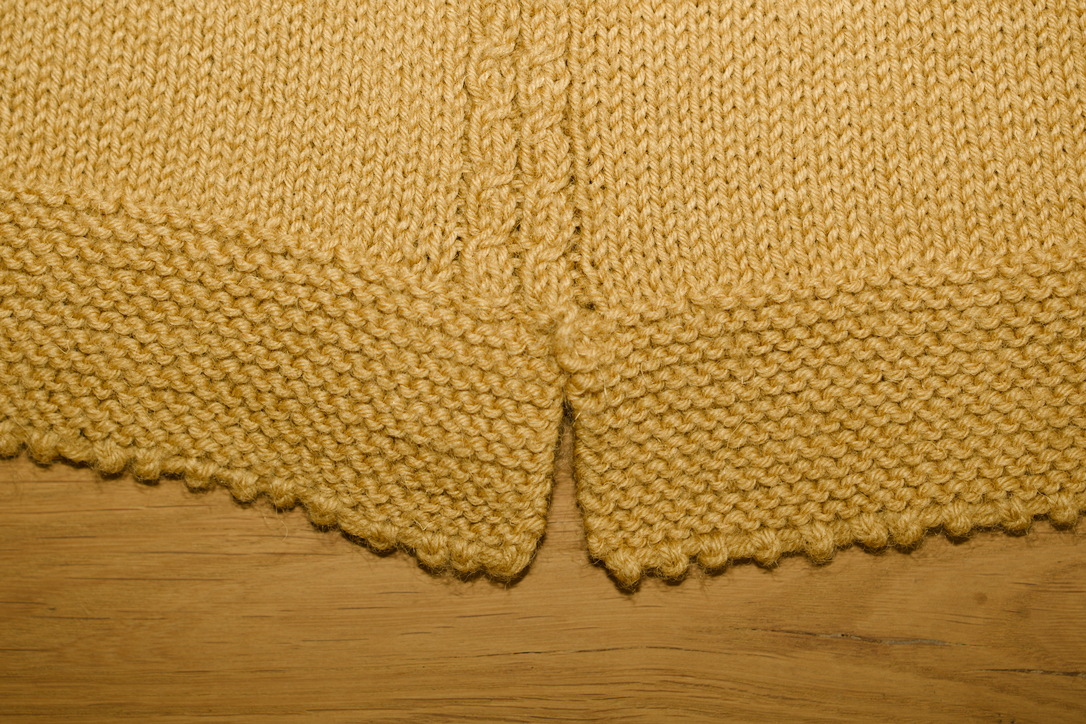
- Channel island cast on
- Welts
- Cable seam stitch
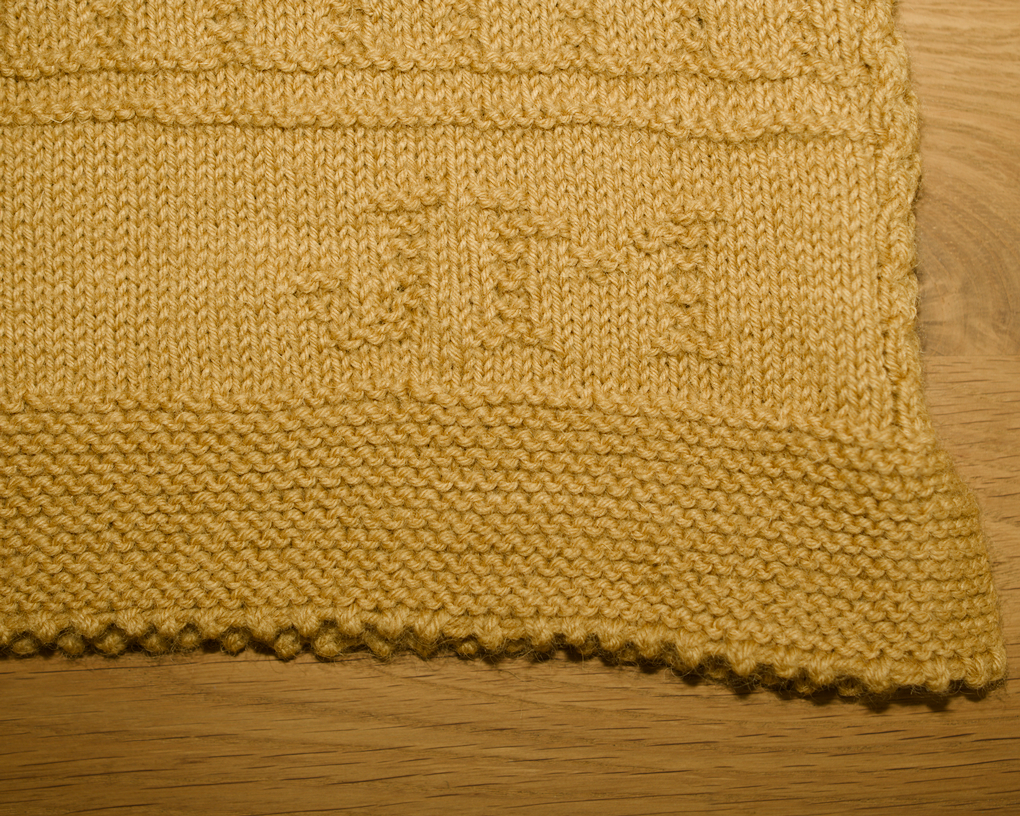
- Initials
- A definition ridge, before vertical bands of pattern
- A distinct motif above the chest, adding some nautical context
- Three needle bind off at the shoulders
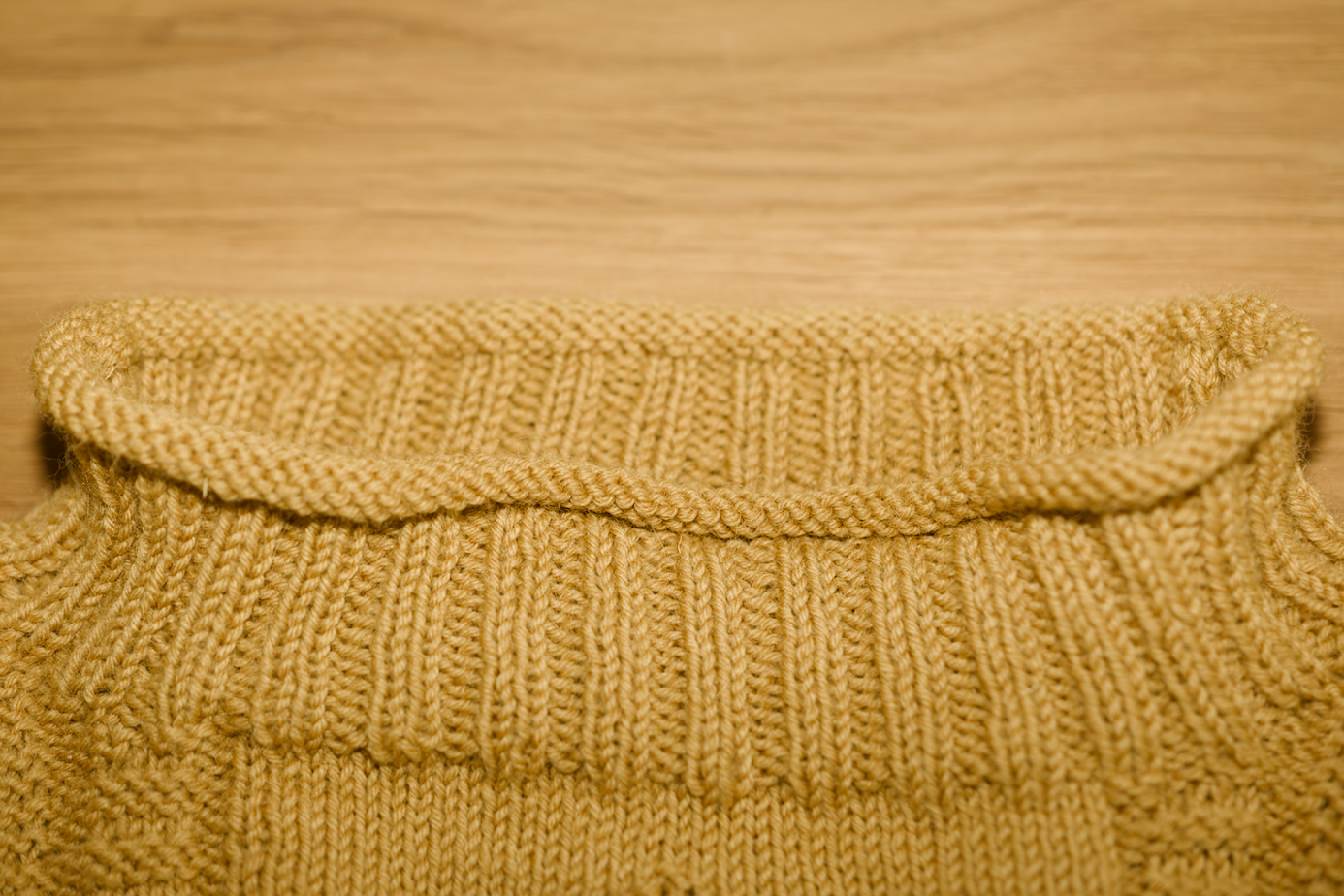
- Rolled collar
I knit the gansey over about six and a half months. The small needles and detailed pattern did make it a bit slow (even though I was sizing up slightly!). Being mostly just knits and purls with little shaping it didn’t feel difficult, however. And knitting in the round keeps you facing the right side, which helps seeing where you are in the repeats of the geometric patterns.
It was fun to knit and knitting seamlessly gave a better sense of progress than knitting panels, knowing you won’t need to spend a significant time stitching up even after all the knitting is done. I also felt more connected and engaged with the garment because it was my pattern. Making decisions and adjustments along the way, doing some arithmetic to estimate sizes and repeats of patterns meant it was quite active. You can switch between knitting and designing as you prefer; I didn’t decide on motifs for my sleeves until I had finished the whole body.
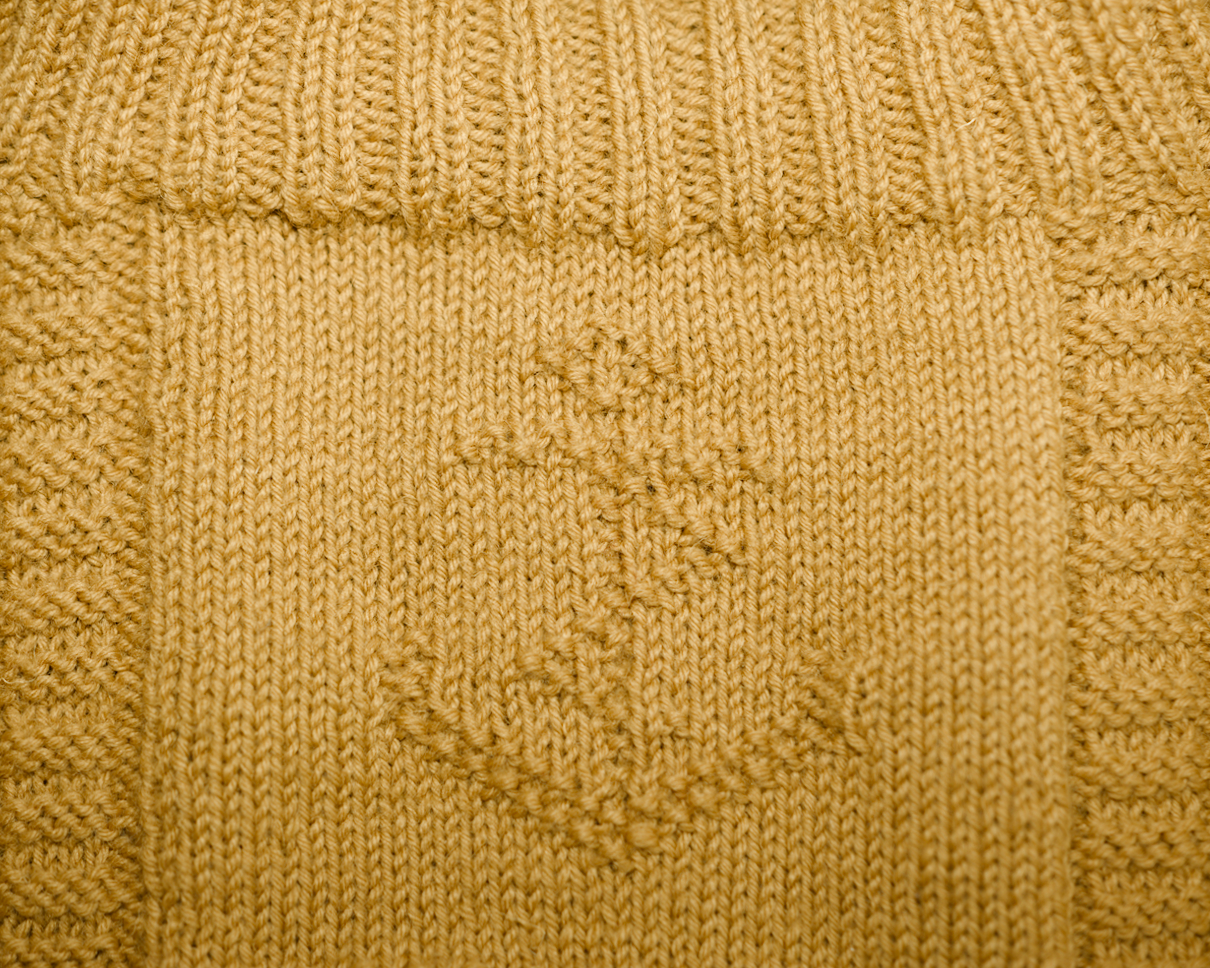
I would like to transcribe and (openly) publish the pattern properly from my notes. Here I am diverging from tradition, and a tendency (I think) for knitters to keep their personal patterns private. I feel blocks and unmotivated after not finding a good system for making charts from plain-text. There seems to be a gap in the market for actively-maintained, open-source knitting software. Perhaps I can make do with Inkscape for charts and some text.
The Next Gansey⌗
I would like to make another gansey, I have already bought the yarn (this time a light blue). Next I think I will make a more simple pattern, perhaps with a large plain area. And to try some different techniques, horizontal patterns, shoulder straps.